Building Trust with UX Advancement
Funding Circle US provides term loans to small businesses, with longer durations and a higher credit bar than most competitors. This requires a decision funnel that is both efficient and trust-building. I led 3 UX initiatives focused on data collection, improving conversion while reinforcing clarity, security, and user confidence throughout the process.
01
PROBLEM
Incomplete Data Was Breaking the Funnel
When I joined in 2022, the online loan application process has great room to improve. Incomplete submissions flooded the pipeline, forcing Account Managers to intervene manually via phone calls, which is a costly, unscalable model.
The root causes were threefold:
Returning customers faced no differentiated UX despite higher trust and intent.
Credit report match rates were critically low (87% personal, 38% business), blocking automated decisioning.
The bank statements collection process created friction and security concerns that stalled final submission.
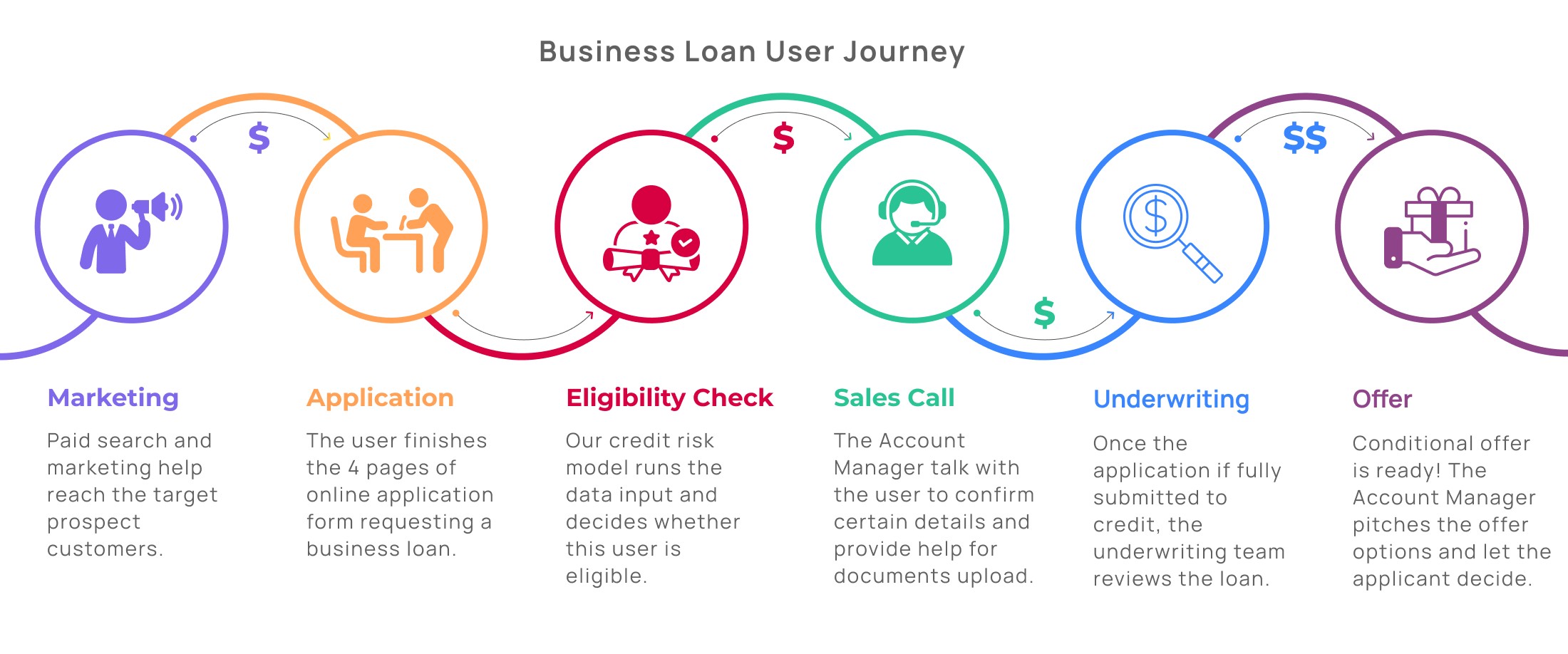
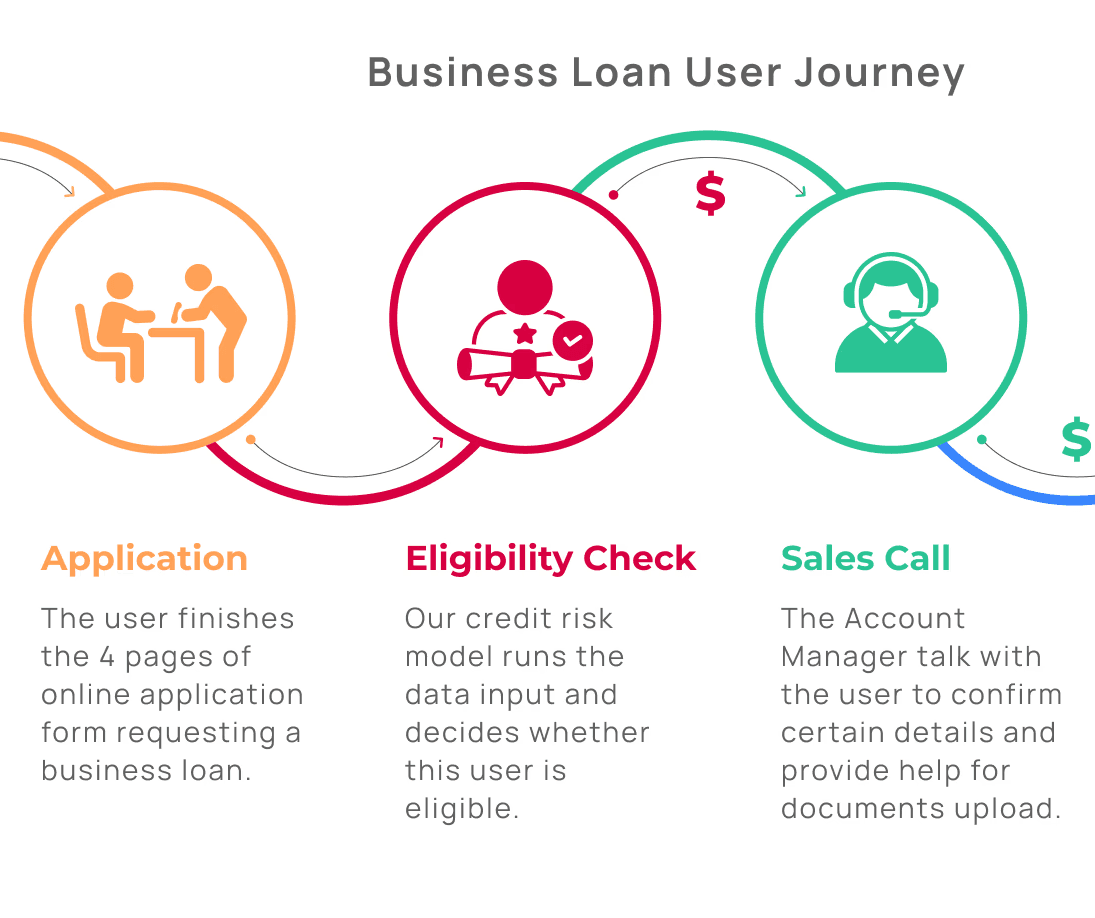
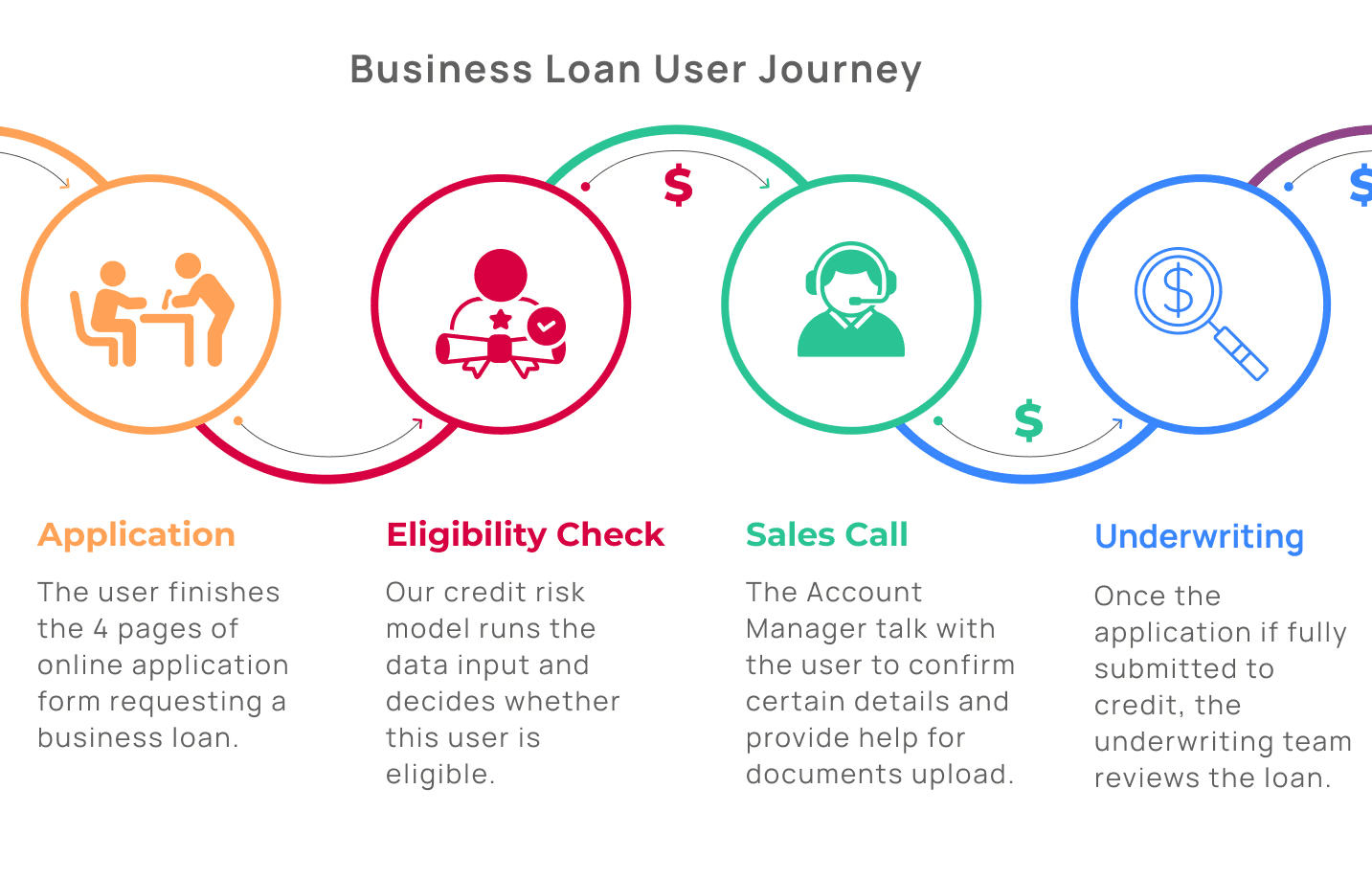
As the sole Senior UX Designer for the US market, I worked closely with Product, Developers and Data Analytics teams to identify solution strategies. The mandate was finally clear: redesign the application flow to maximize data completeness and accuracy, reduce operational overhead, and accelerate credit decisioning without restructuring the underlying data model.
02
IDEATION
Introducing Design Thinking to a FinTech Org
Over five years, the company operated within a traditional banking and financial services model. I led three top-of-funnel optimization initiatives, guiding cross-functional stakeholders into a design thinking process and demonstrating the tangible value of UX.
Leveraging existing UX and marketing research from multiple agencies, I defined three core personas and developed journey maps for each project—significantly improving the clarity and efficiency of stakeholder alignment. I also secured executive buy-in and budget to run concept validation studies on UserTesting, establishing a stronger foundation for evidence-based design decisions.
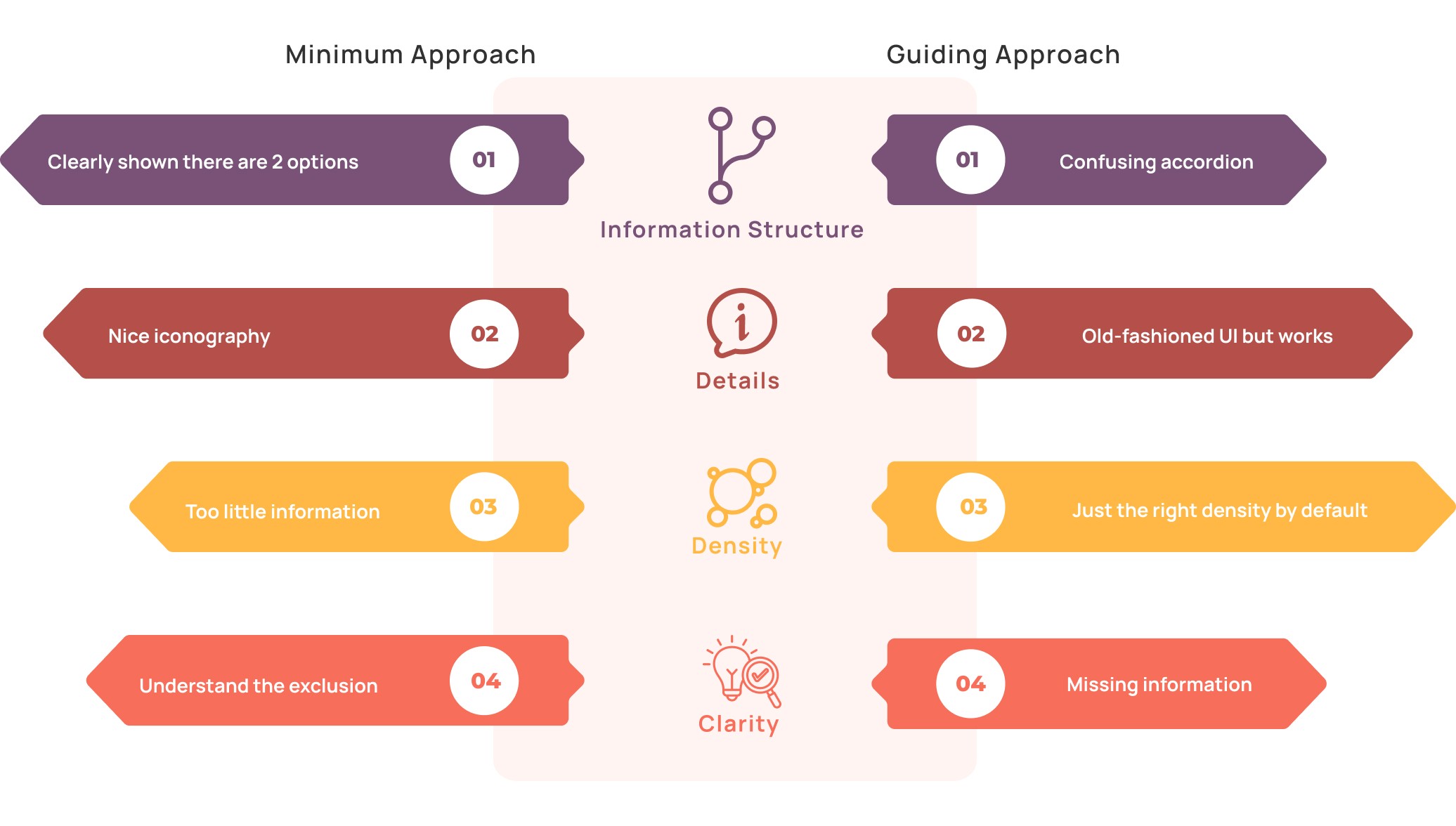
Design Options Comparison Results from User Testing
Every direction was pressure-tested at low fidelity before moving forward—no assumptions went unchallenged. I presented final UX proposals, grounded in research insights, to the Head of Product, Chief Revenue Officer, and U.S. Managing Director.
03
SOLUTIONS
Focused Interventions for Distinct User Challenges
Change #1 - Returning Customer Fast Track
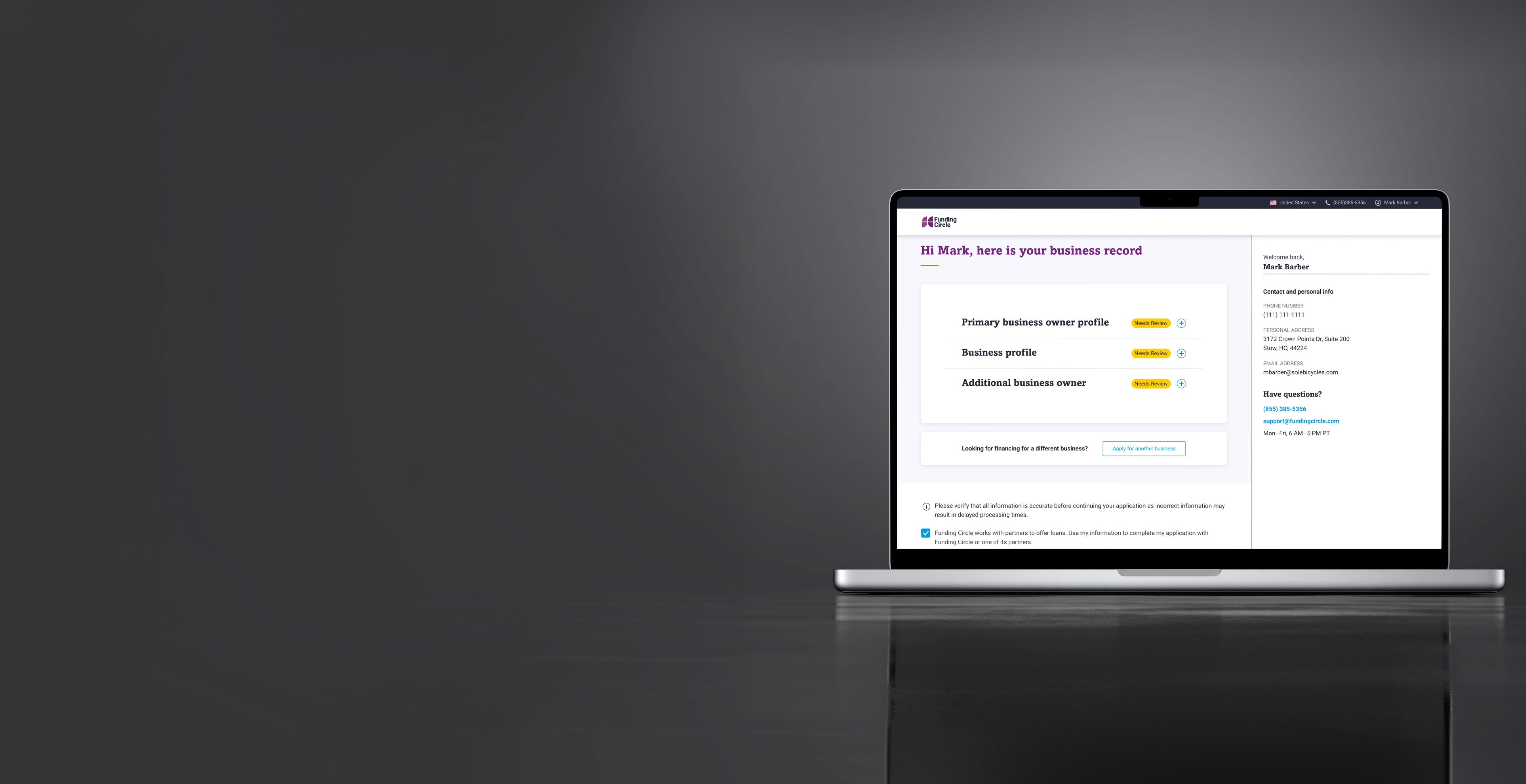
Returning borrowers converted 12% higher than new applicants, yet the application experience offered them no advantage.
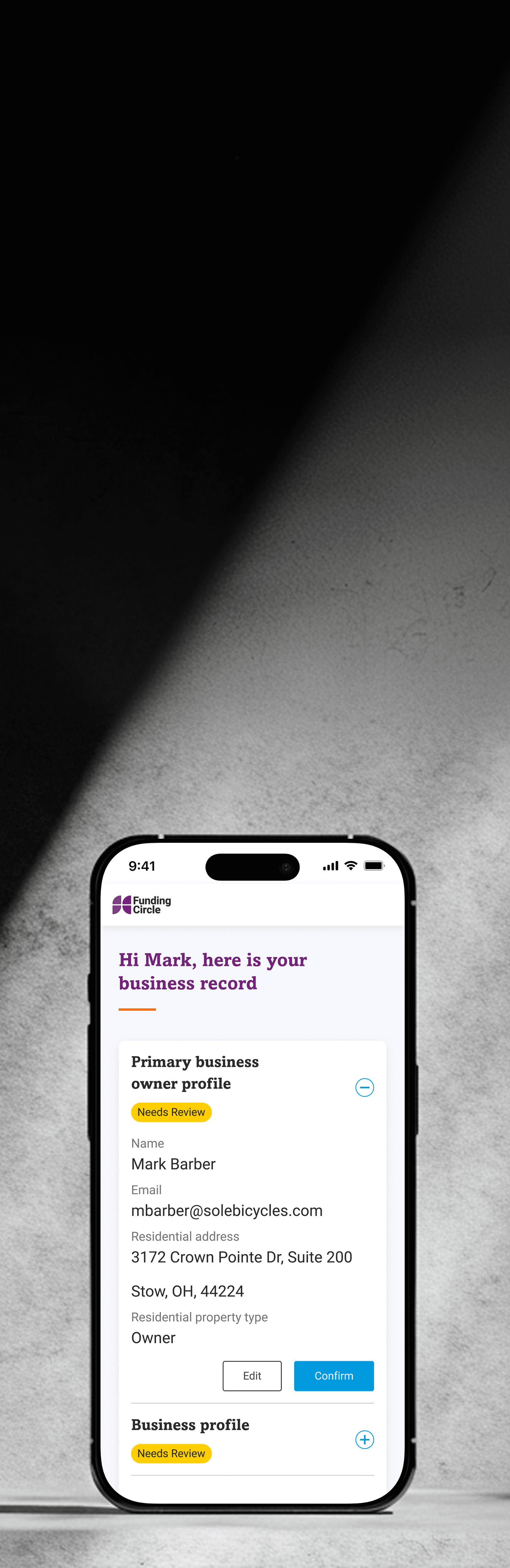
Stakeholders initially pushed for field-level prefill. Through research, I challenged this direction as too aggressive. Incorrect prefilled data is difficult to catch and can erode user trust. I introduced three alternative approaches and guided the team toward a section-level confirmation model, where users review pre-populated information within accordion panels and explicitly confirm or edit as needed. This approach reduces cognitive load while preserving data accuracy.
Concept validation with 12 participants, including two funded customers and ten prospective applicants, supported the direction. The outcome is a meaningfully shorter journey for high-intent returning users without compromising data quality.

Advanced Returning Customer Loan Application UX
Change #2 - Credit Report Match Rate Recovery
Low credit report match rates (87% personal / 38% business) were traced to three root causes:
Frozen personal credit reports
PII mismatches
Ambiguous multi-report business matches
Rather than surfacing a generic error, I designed a sequenced intervention flow that guides users through prioritized corrective actions: unfreeze first, select the correct business report second, self-verify PII last. Sequence was validated through two rounds of unmoderated UserTesting with 12 participants. This approach reframed a backend failure as a transparent, recoverable user moment.
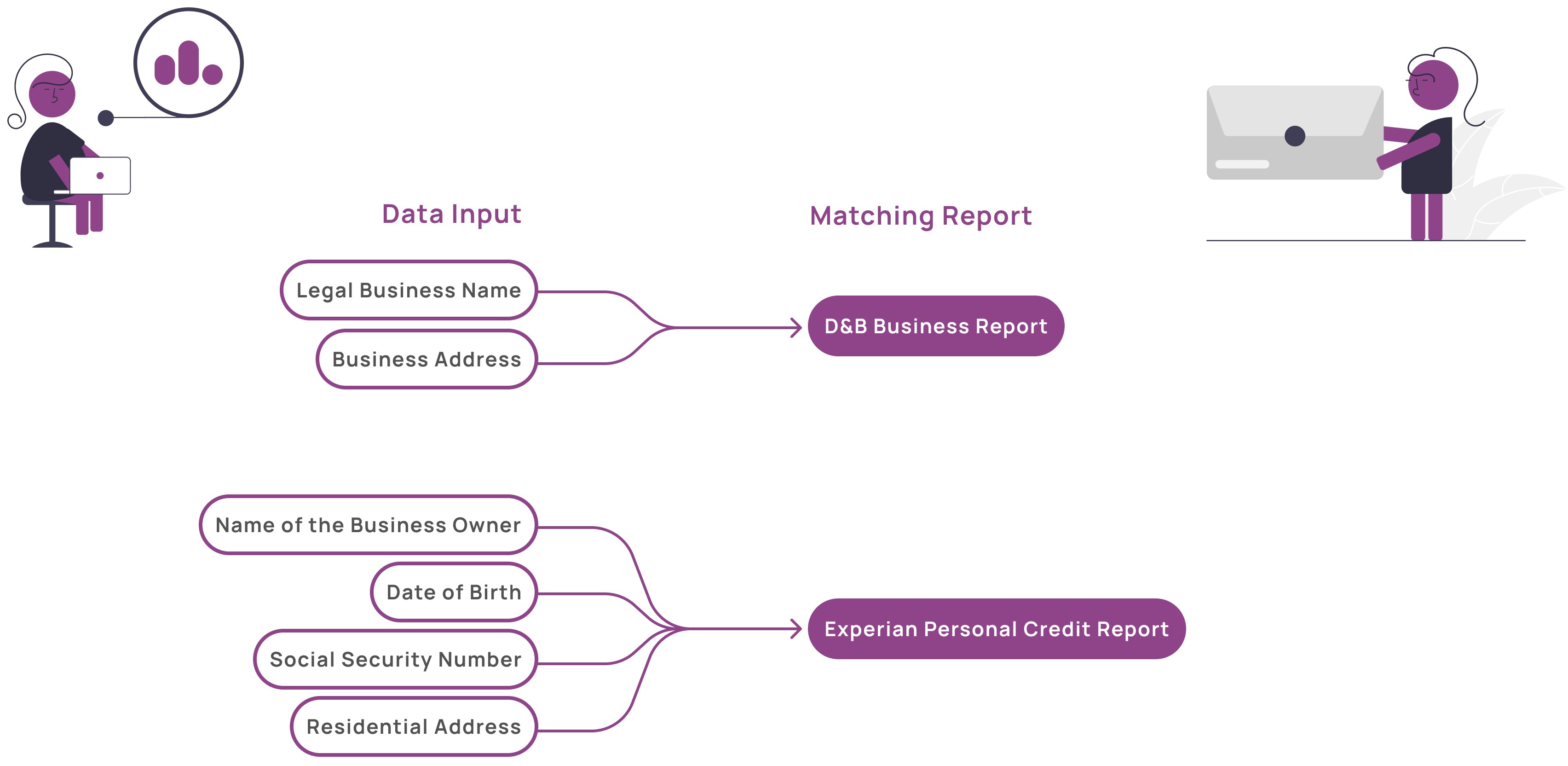
Backend Logic for Credit Reports Fetching
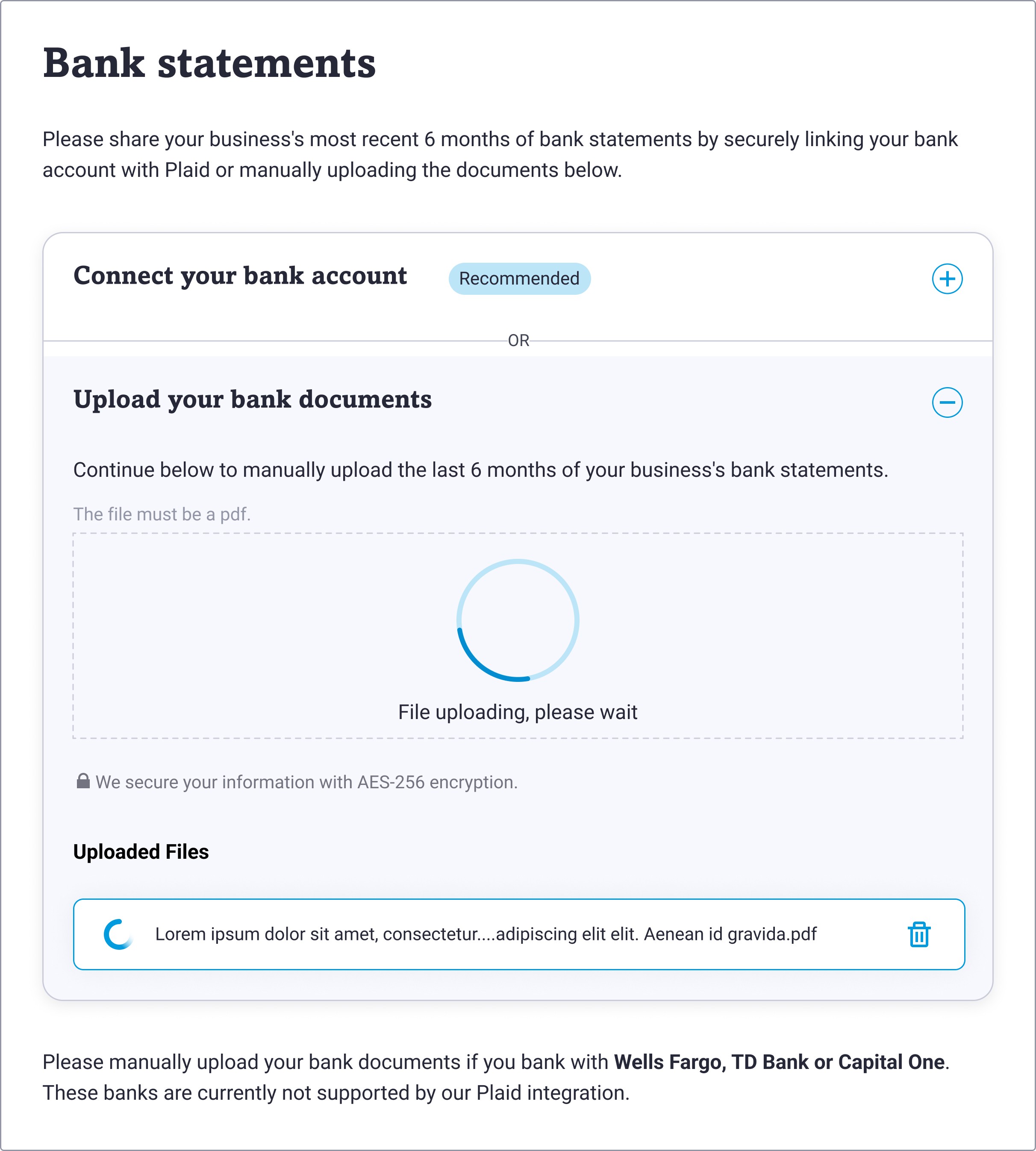
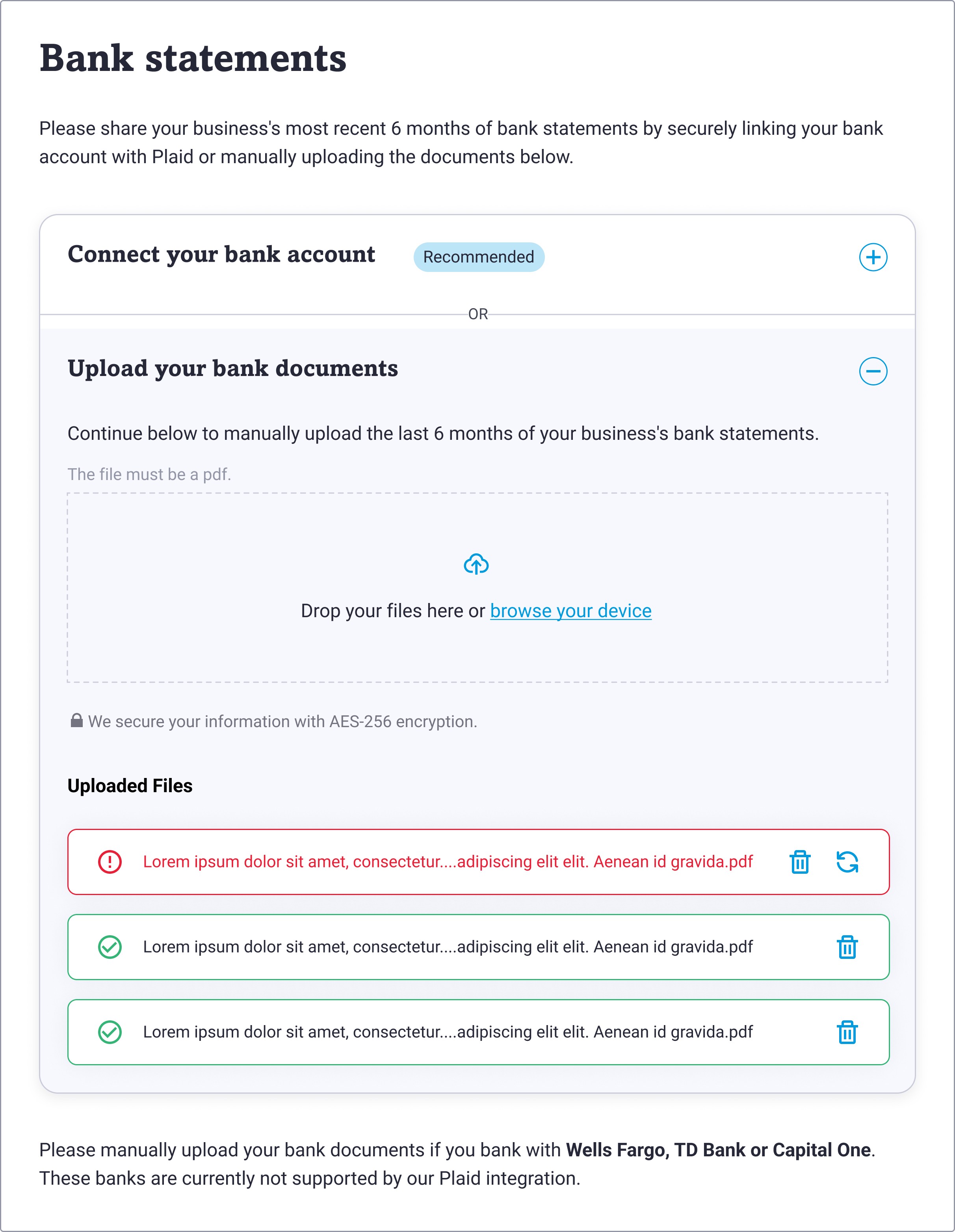
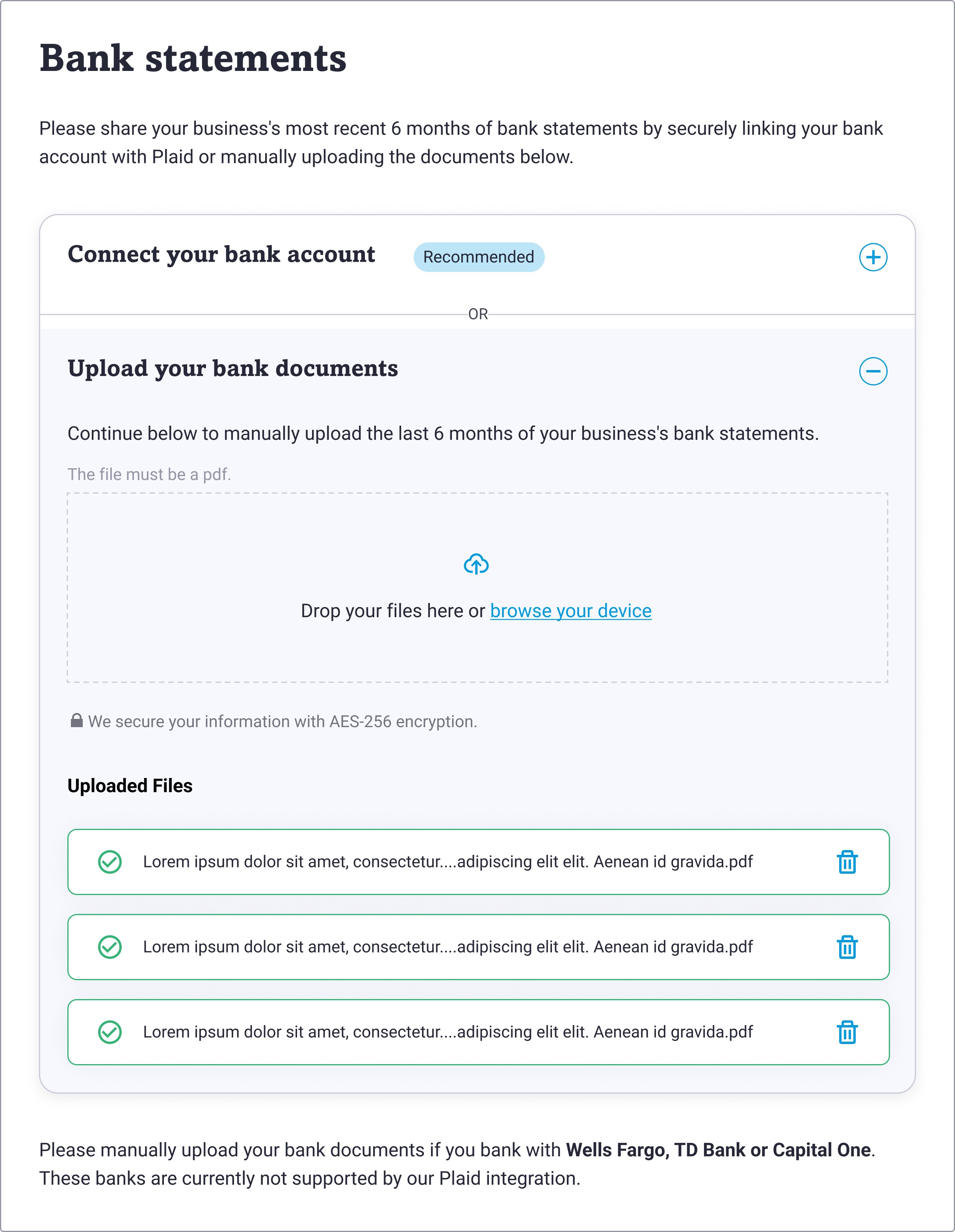
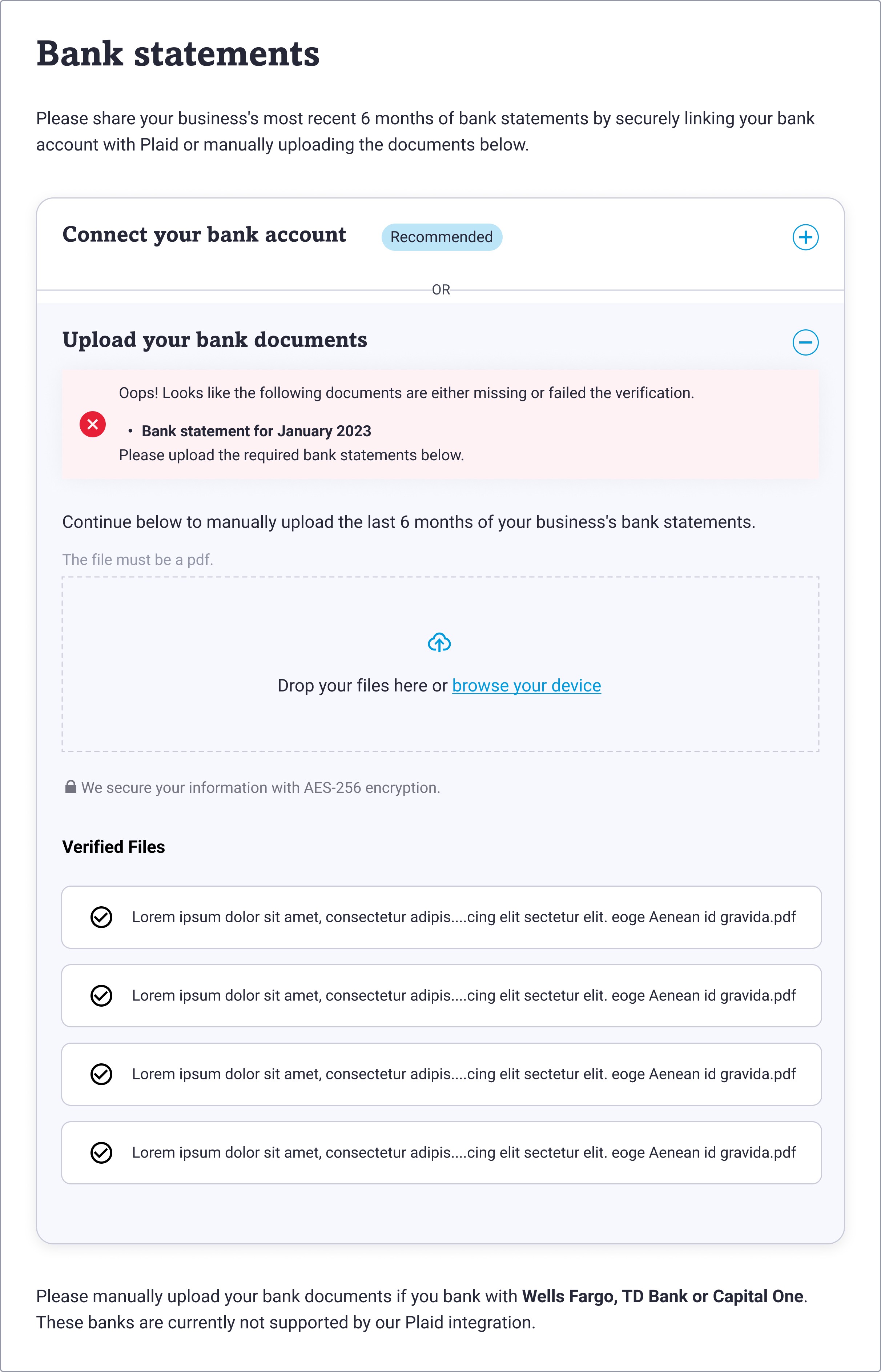
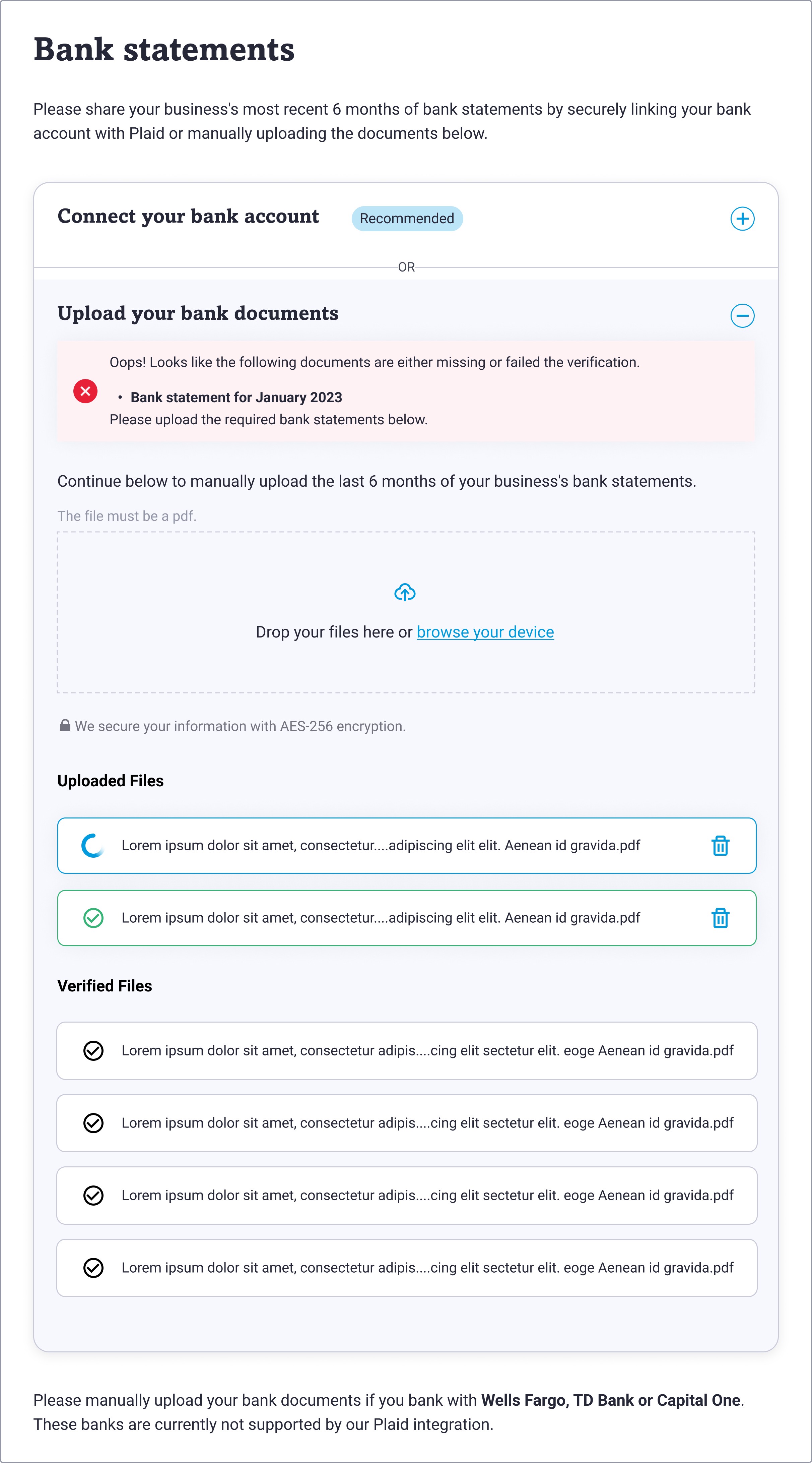
Change #3 - Bank Statement Collection Boost via Plaid
Document upload was a known drop-off point, with users citing security concerns and friction when managing files across platforms.
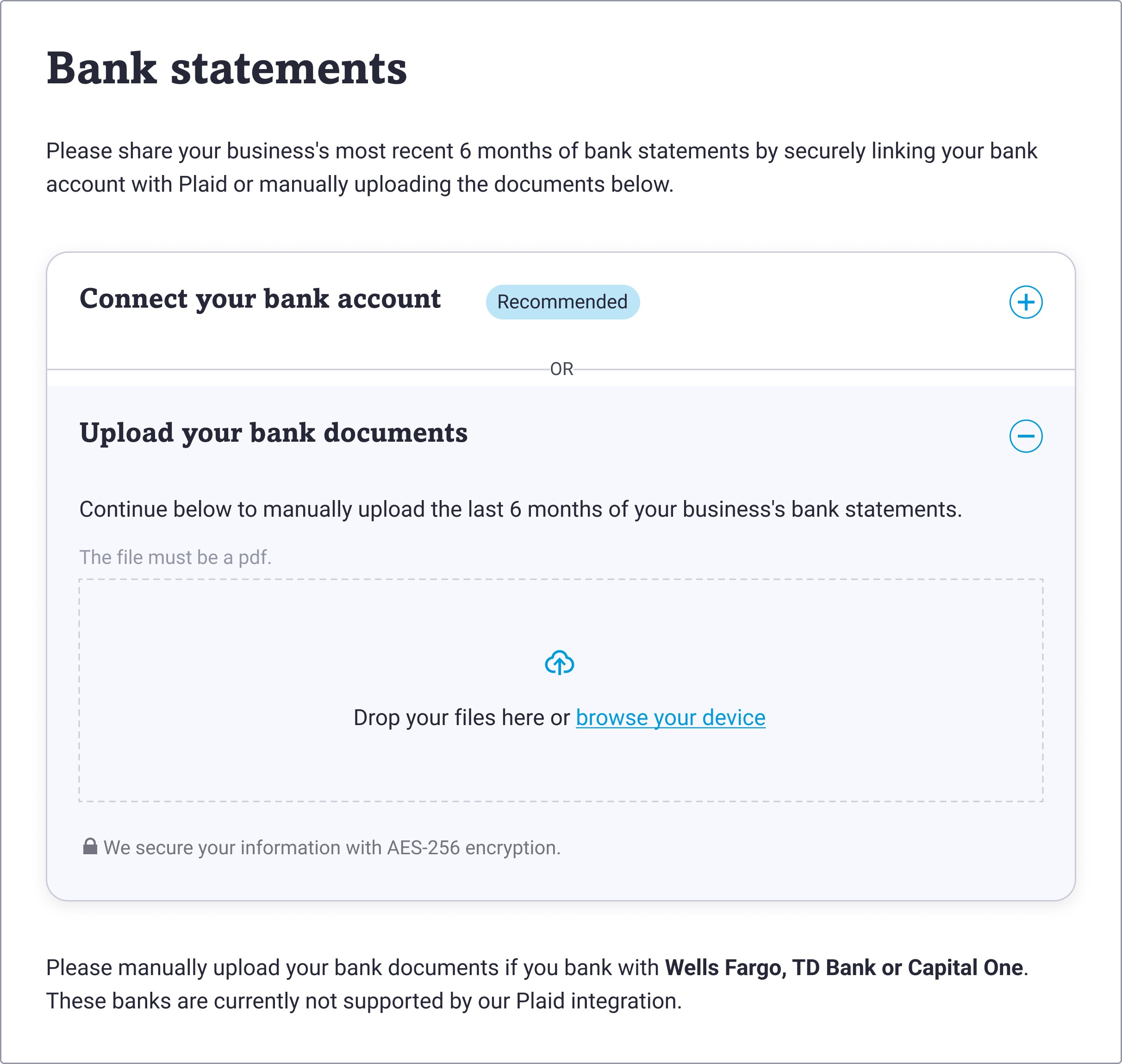
I led the UX design of a dual-path experience that supports both manual upload and Plaid account connection, with intentional emphasis on Plaid as the faster and more secure default.
Key decisions included iterative copy testing with 10 users to clearly communicate Plaid’s bank coverage and exclusions, defining four distinct document validation states with explicit failure labeling, and introducing proactive email notifications that explain both completed actions and next steps. Together, these improvements reduce ambiguity at a high-anxiety stage of the journey.
+10%
Personal credit report match rate
+37%
Business credit report match rate
+19.2%
Application-to-AM assignment conversion
+31.0%
AM-to-credit submission conversion
-24 hrs
Average processing time
-2
Sales headcount saved
BACK TO