


Transfer with Zelle® Instantly
As UX lead, I partnered with Product to evaluate three B2B2C architecture models and selected the TCH Real-Time Payments (RfP) approach. Following concept validation through 12 user interviews and two surveys, I delivered comprehensive cross-platform UX guidelines for adoption across Zelle® network financial institutions.
01
OPPORTUNITY
A $192B Market with No Clean UX Solution
Customer Problem:
Funding a self-directed brokerage account—moving money from a bank account to invest—typically can take 1-3 days. Current instant transfer methods are costly.
Zelle® Competitive Edge:
With its broad network of 2,000+ financial institutions and 150+ million users, Zelle® presented a unique opportunity to reimagine this flow as an instant, integrated experience.
The UX Challenge:
This initiative introduced a net-new use case for the Zelle® network, without prior models to reference. Designing for it meant working within a complex B2B2C ecosystem, where the experience had to function seamlessly across brokerage platforms, banking apps, and Zelle®’s brand system, balancing consistency with the flexibility required by a highly distributed product environment.
02
UX STRATEGY
3 Models, 1 Good Answer
Before getting into UX ideation, the product needed an architectural foundation. Working alongside product, engineering, and TCH partners, I evaluated 3 technical models for how the transfer would actually move.
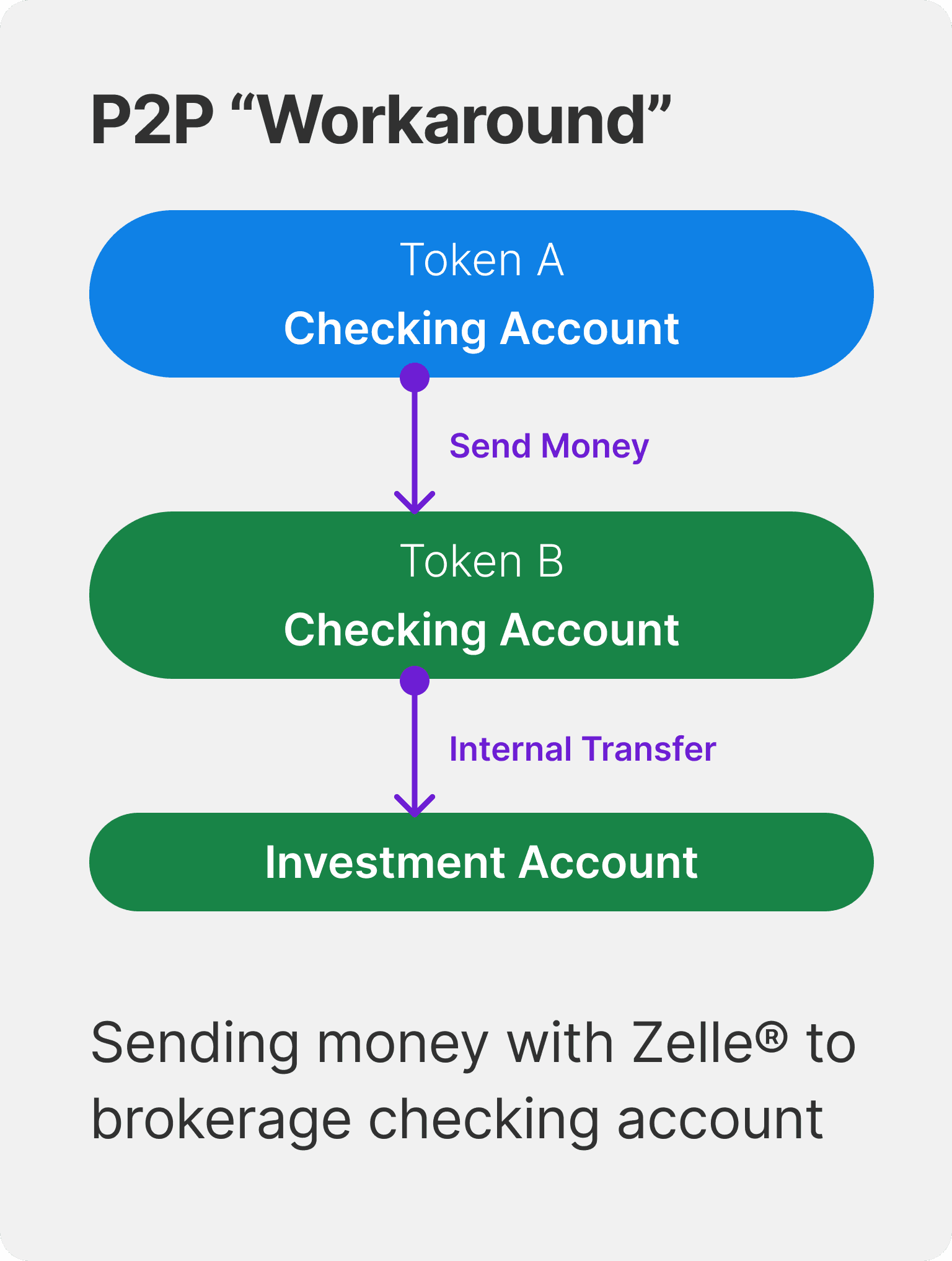
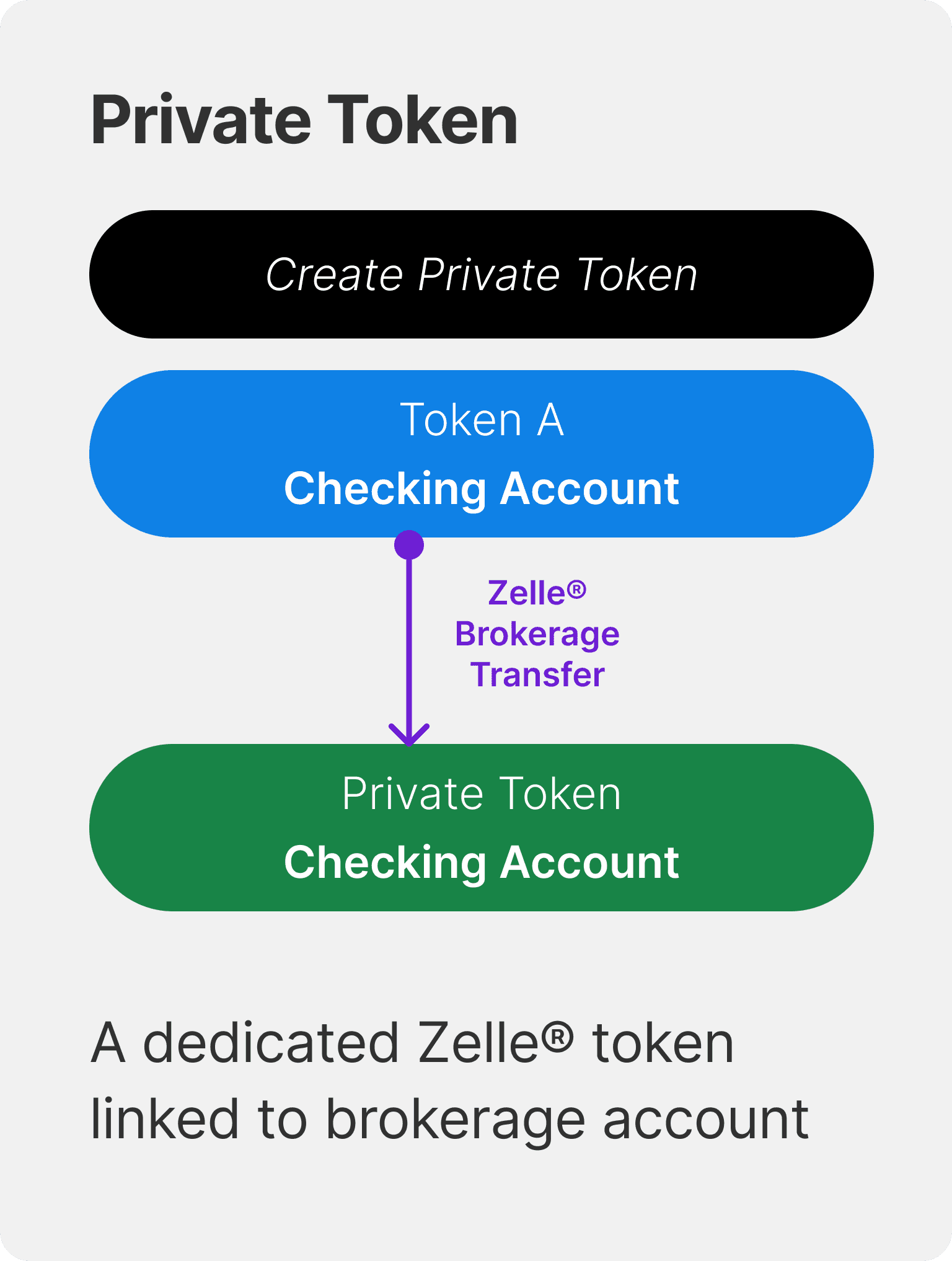
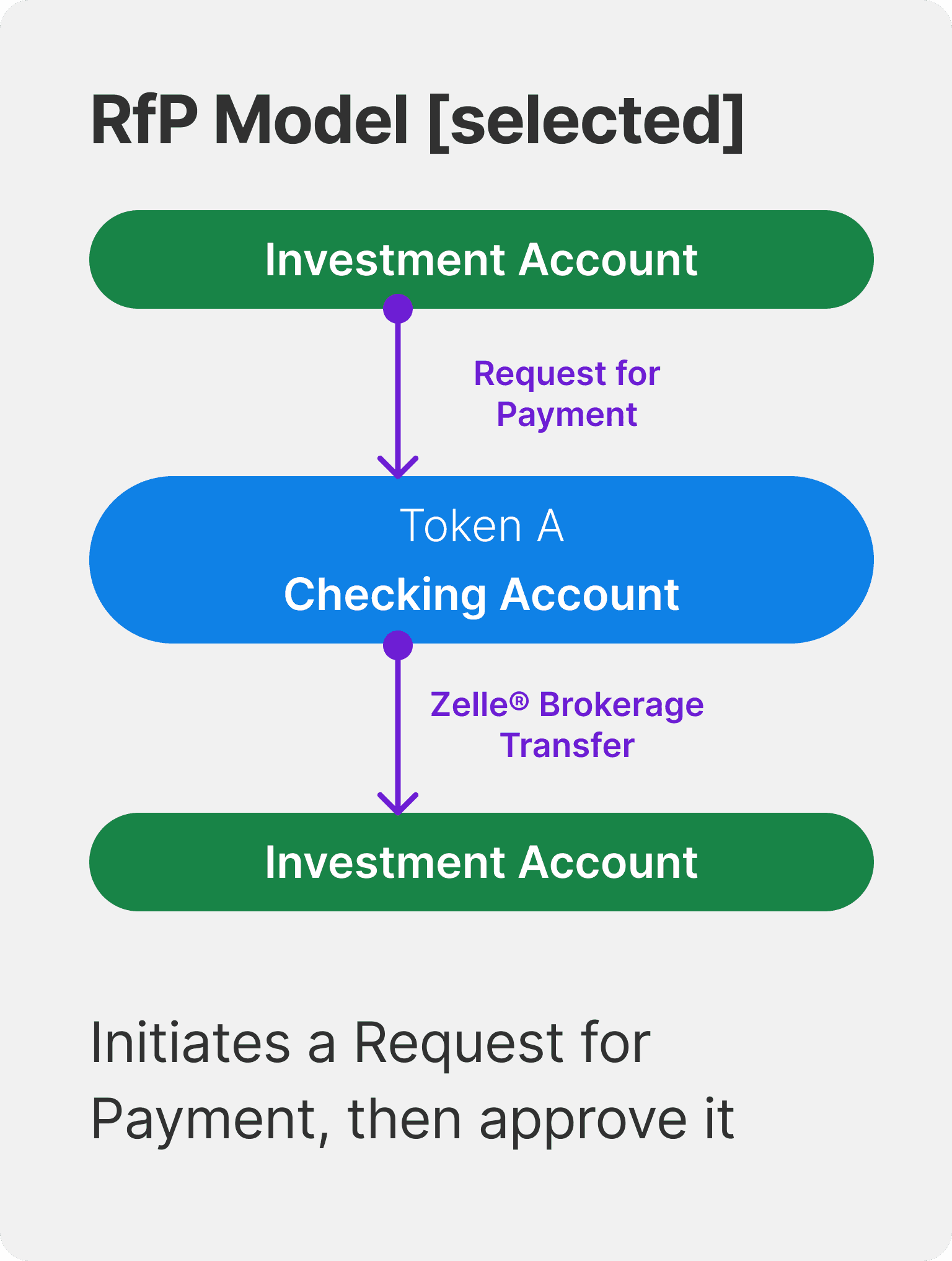
This was a pivotal decision point where I made the final call as UX lead. I evaluated three models for UX advantage and influenced the Product with the following takes:

Intuitive entry-point placement: Since users think about funding investment account primarily in brokerage apps, the selected approach is more intuitive to meet users at the moment they need us.

Fastest UX: Simplifying token management makes the selected approach the fastest transfer although the user journey seems longer.

Security & instancy pitch: The selected approach builds on existing Request for Payment (RfP) capabilities at network banks while enabling secure, instant brokerage transfers. The RfP approach opens UX opportunity to show Zelle® advantage directly among competitors.
03
RESEARCH
12 Interviews, 3 Insights that Shaped Everything
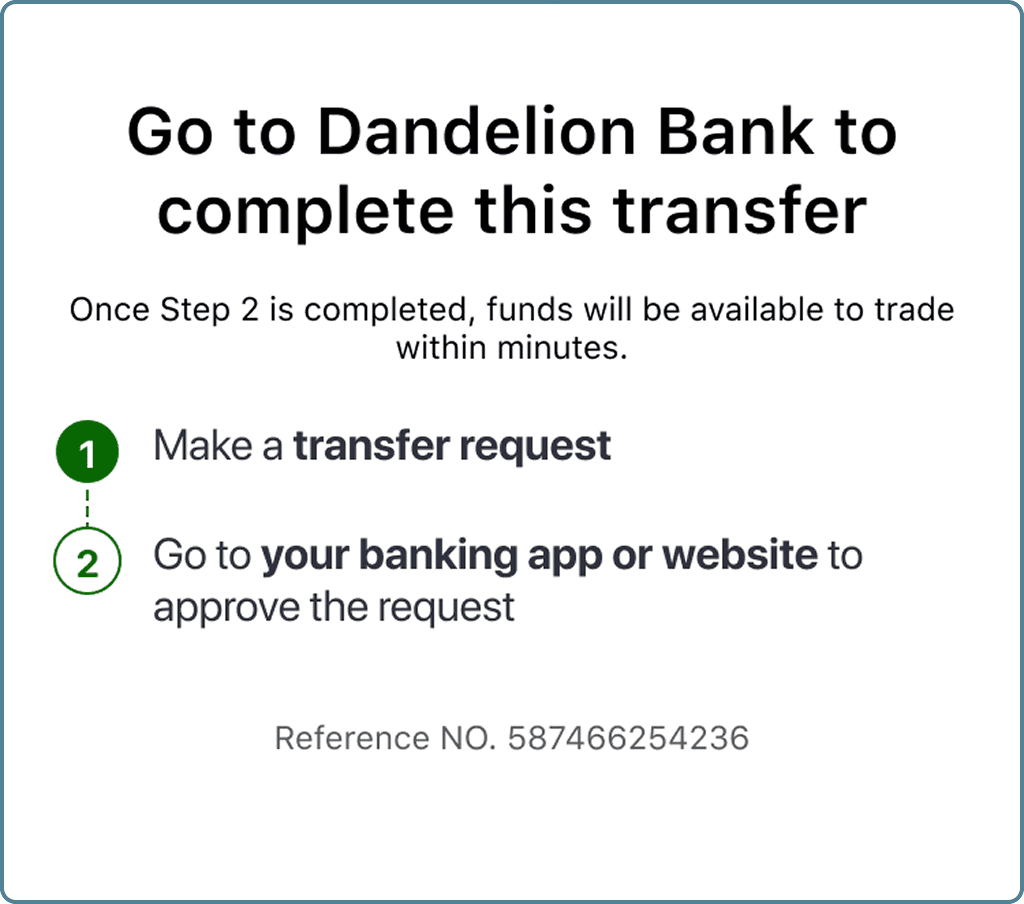
The RfP model introduced a core UX challenge: a two-step flow spanning two apps. Users initiate the transfer in the brokerage app and complete it in their banking app. The design goal was to make this feel like a single, continuous experience—not two disconnected transactions.
Through iterative design, I partnered with UX researchers to validate the concept using a mid-fidelity Figma prototype, on top of an online survey. The findings reduced risk around the extended journey and gave stakeholders the confidence to move forward.
12
1-hour user interviews testing RfP UX comprehension
400
Survey participants from eligible Zelle® customers
3
Key insight clusters driving the design decisions
Finding#1: People do want this product
Strong demand for instant brokerage funding. The 1–3 day settlement delay is a top pain point. High differentiation potential.
Finding#2: RfP is unfamiliar but learnable
Most users initially expected to pull money directly. But with the right framing, they quickly understood and accepted the two-step RfP flow.
Finding#3: Speed outweighs friction
Most are willing to pay a small fee for instant funding. The extra step is acceptable when the benefit is clearly communicated.
04
DESIGN
3 Design Pillars across 2 Platforms
The final UX addressed drop-off across the two-app journey with four distinct design priorities. I led design iteration to refine the UX details to reach a graceful experience and streamlined the UX compliance process with Zelle® network financial institutes.
1. Clear two-step framing in the brokerage app
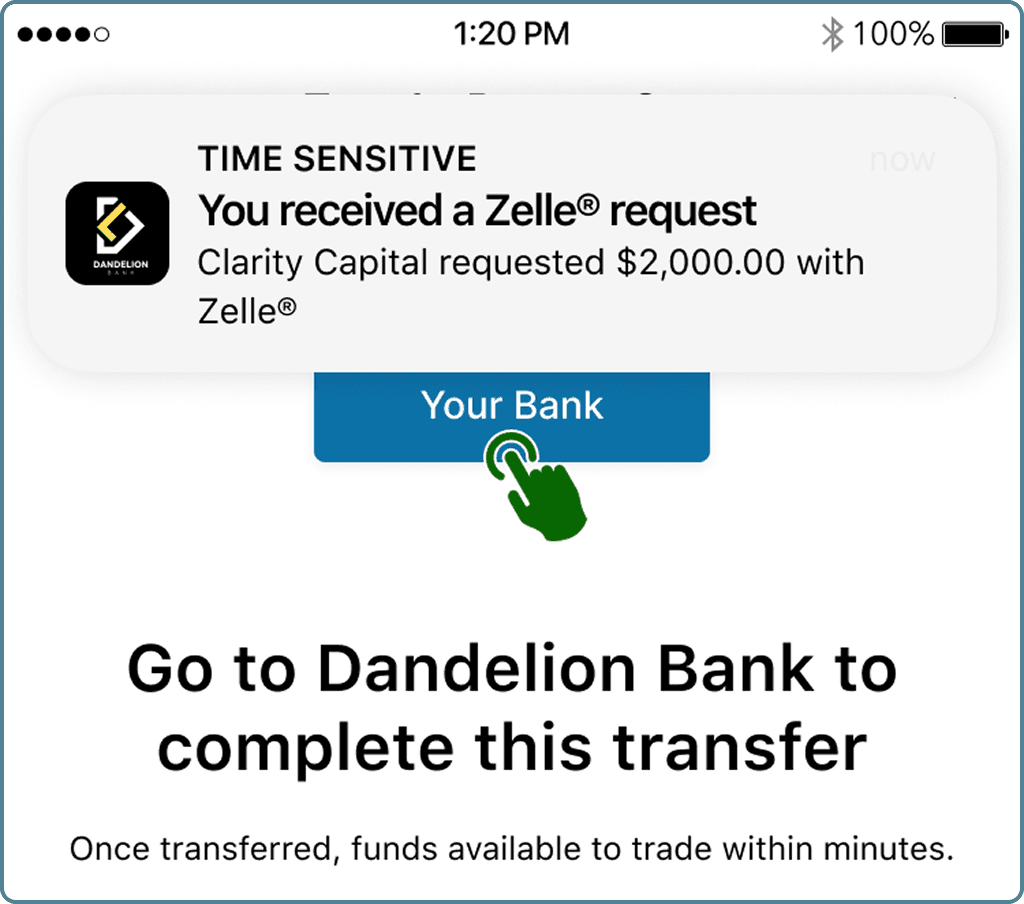
The "Transfer with Zelle®" entry point clearly communicates that Step 1 (request) and Step 2 (approval in banking app) are required before funds arrive. Consistent terminology like "Transfer with Zelle®," "Request," "Complete Transfer" is maintained across all screens.


2. Intuitive navigation in the banking app
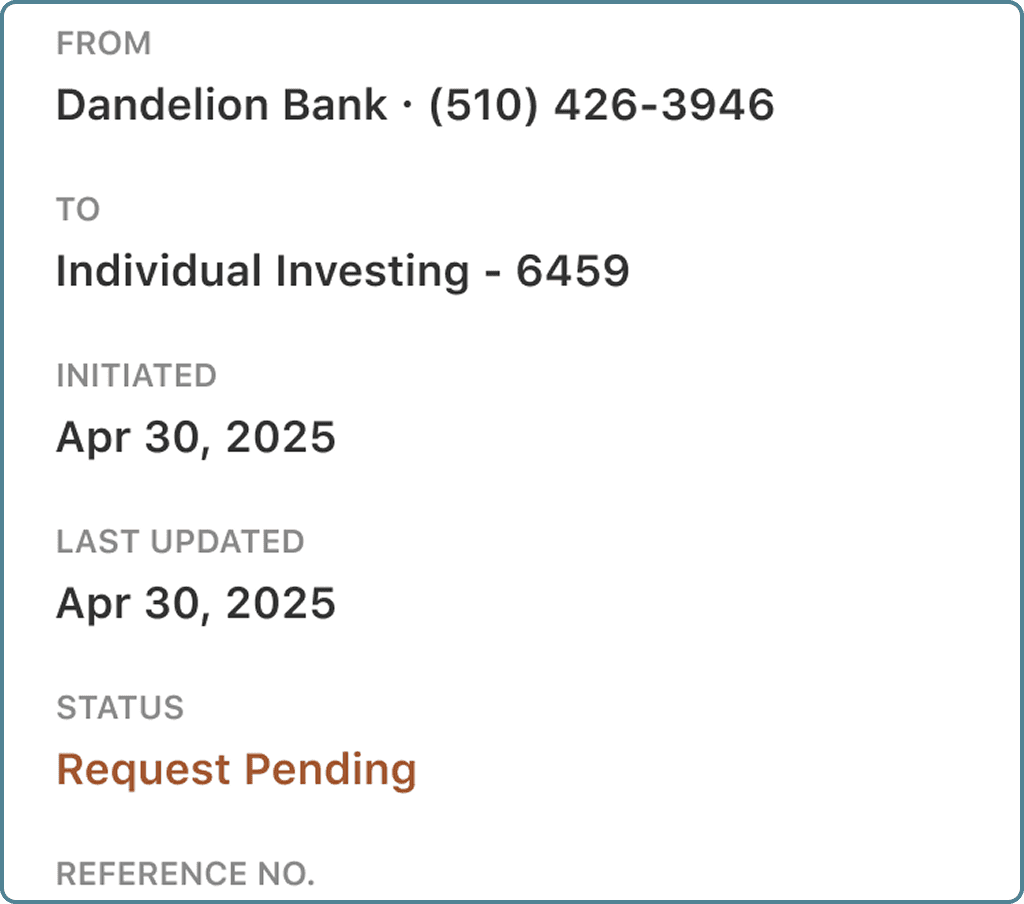
Push notifications with expiration timing, prominent action alerts, and clear activity detail screens (Pending / Completed / Expired / Failed states) give users clarity and confidence for where the transfer is.
3. Final UI and Messaging for network Participants integration

>70%
End-to-end completion rate benchmark for pilot
1st
New use case launched for Zelle® network
2,000+
FI partners in the Zelle® network
BACK TO