
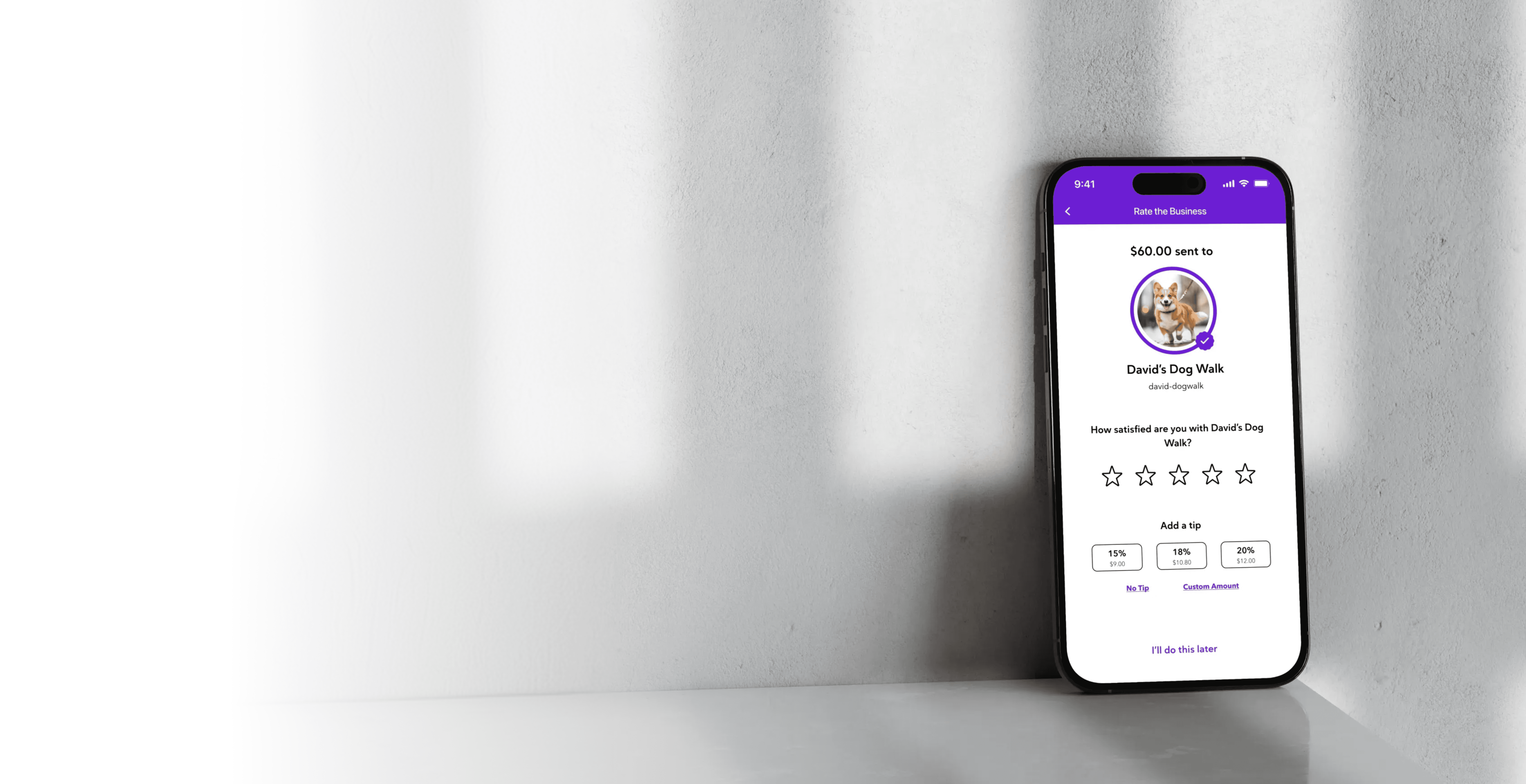
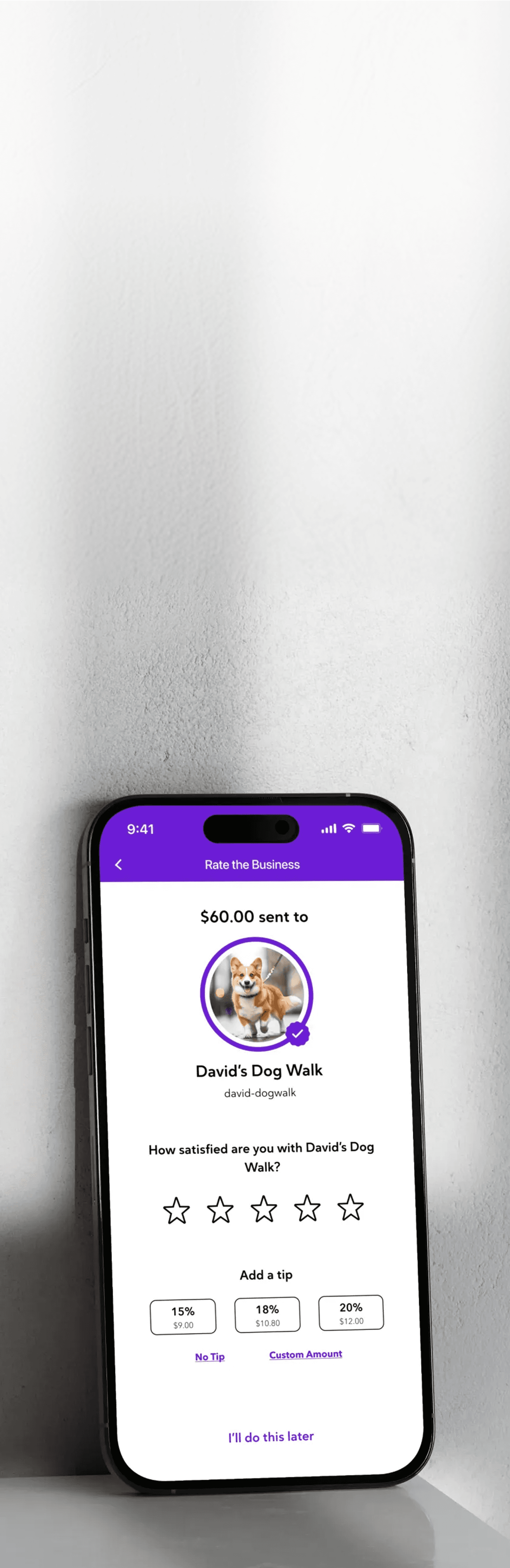
UX-led Zelle® for Business Ideation
With no product manager or formal brief, I identified a gap in Zelle®’s offering and initiated a UX-led concept program for small businesses. I developed 6 feature concepts, validated priorities through user interviews, and advanced the QR code experience toward launch.
01
OPPORTUNITY
Zelle® was Invisible to Business Users
Small businesses use Zelle® daily, but they use the same consumer product as P2P users. There are no designated business features, e.g. enrollment flow, business profile, invoicing. They're making workarounds inside a product that wasn't built for them.
Closing the Gaps
I initiated this effort from a UX standpoint, building on prior Zelle® workshop insights and without a product brief. I led the work end to end: identifying the gap, framing the opportunity, developing concepts, and driving user research. This is upstream, pre-roadmap work where UX helps define what should exist.
02
FEATURES
6 Features, 1 Coherent SMB Experience
Based on Zelle® SMB workshop findings and benchmarking Zelle® competitors UX, I identified 6 features to empower Zelle® business users to manage payments with trust, security and delight.
I mapped what a small business owner actually needs across the full payment lifecycle — from setting up their presence to getting paid and managing their relationships.
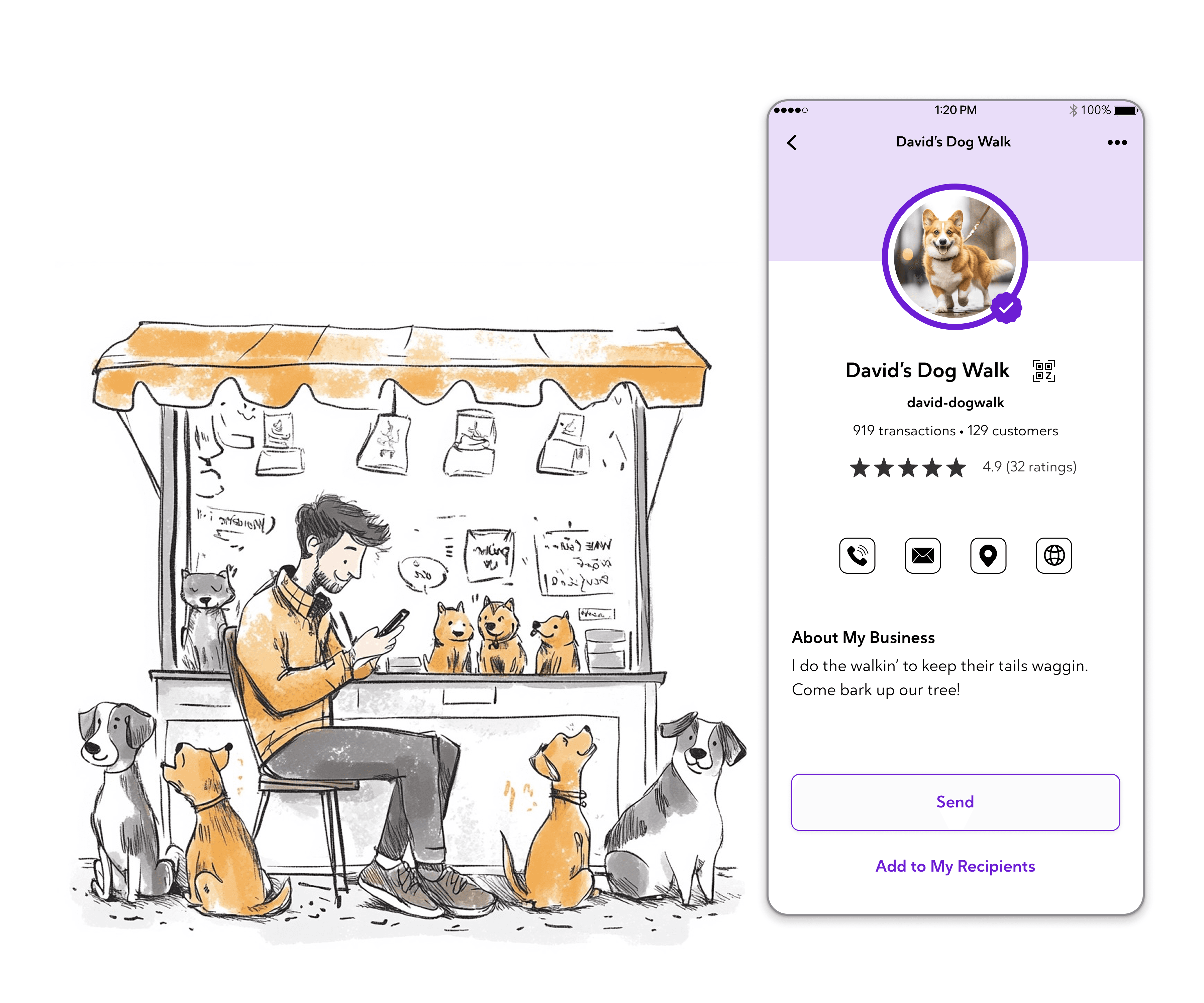
#1 - Zelle® Business Profile
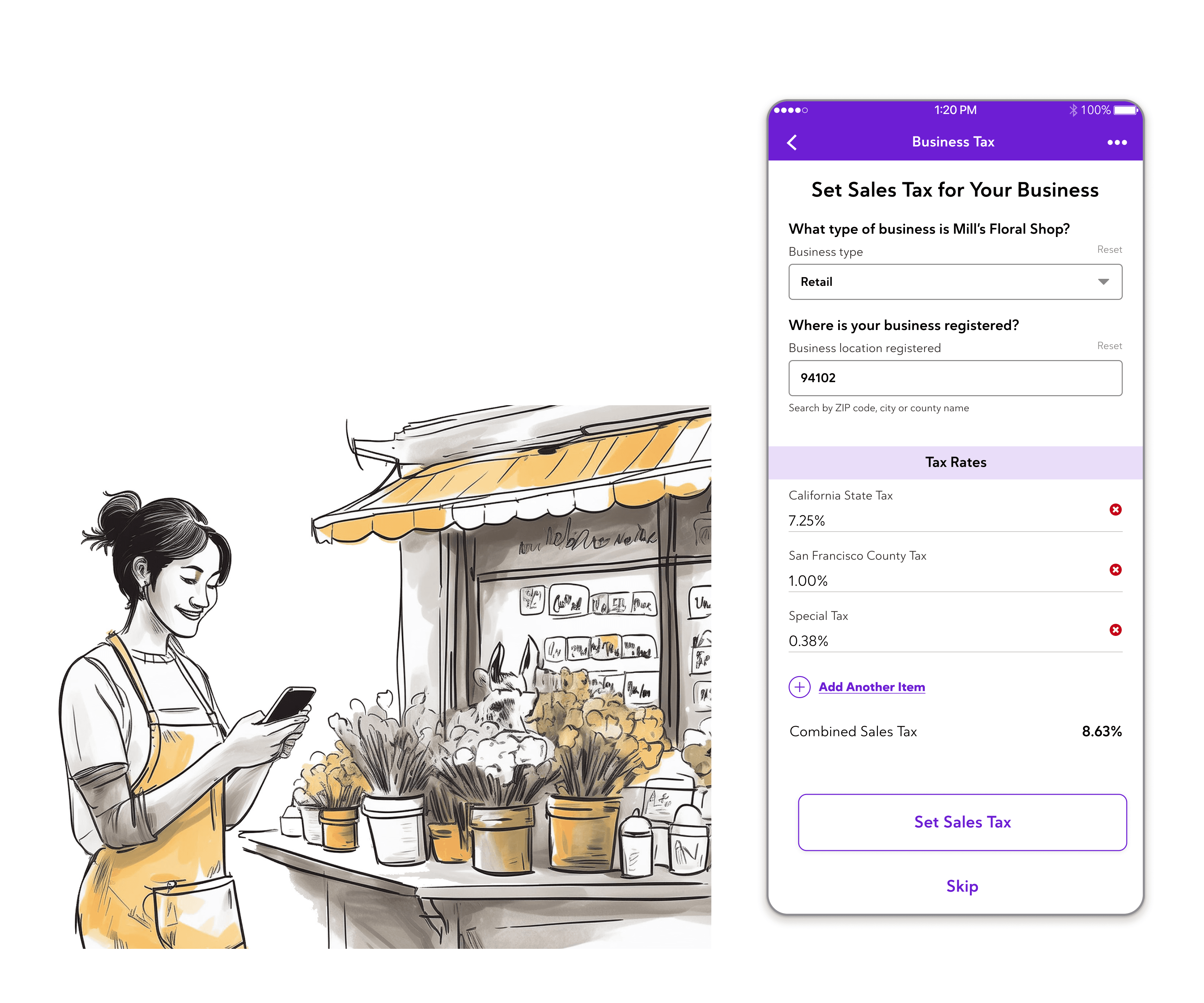
#2 - Business Tax
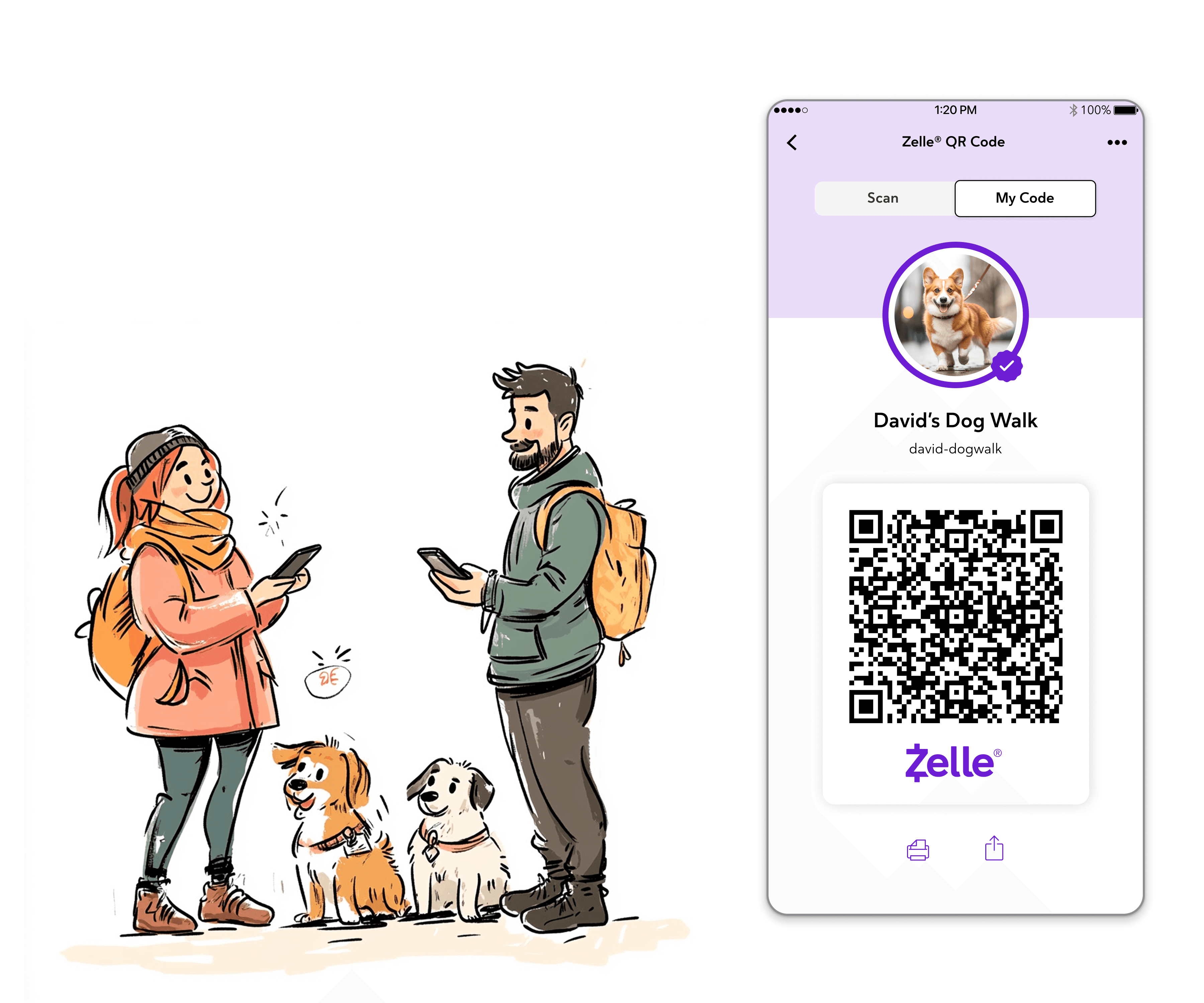
#3 - Dynamic QR Code
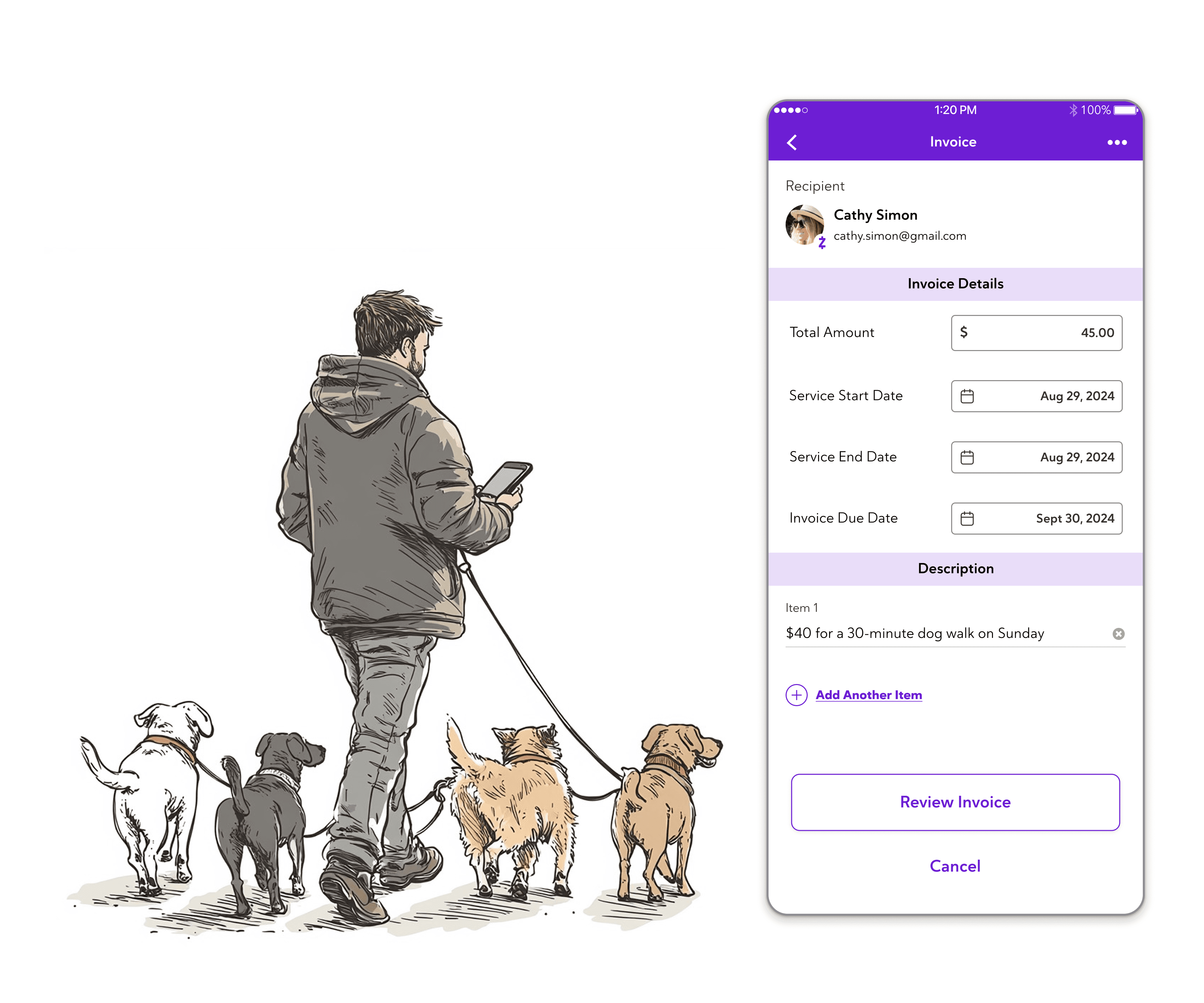
#4 - Lite Invoice
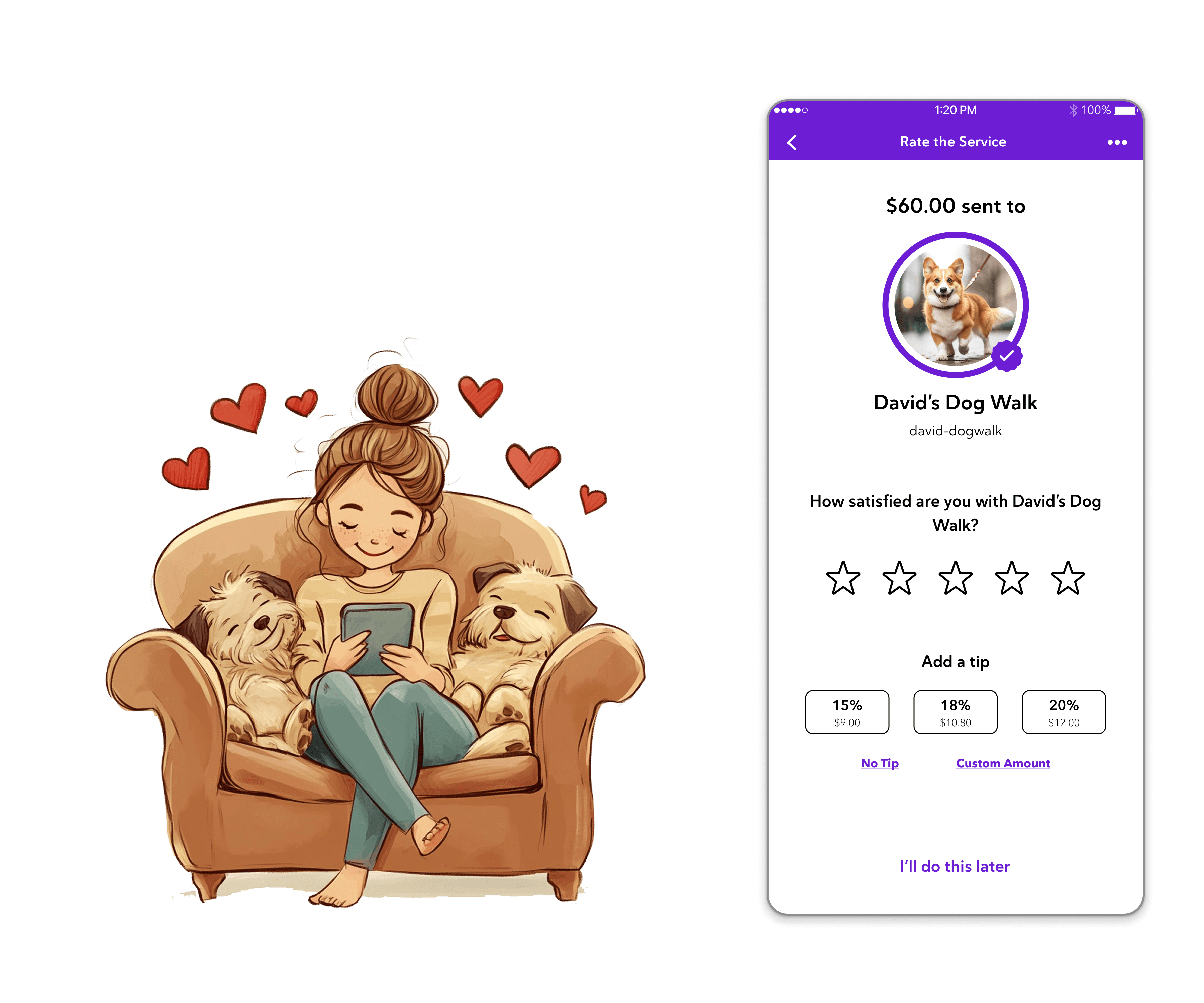
#5 - Rating & Tipping
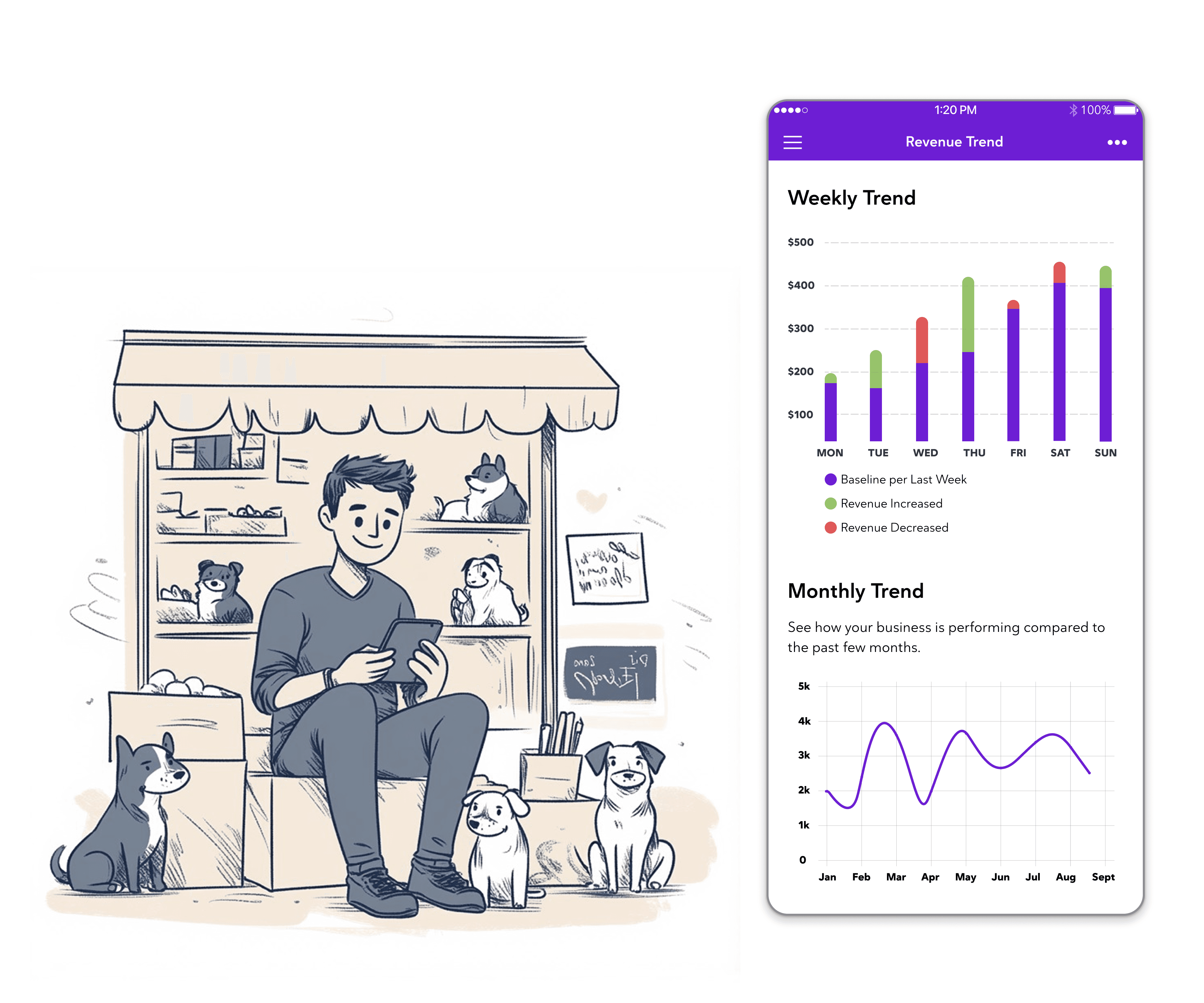
#6 - Activity Data
03
CONCEPT VALIDATION
Evidence for Priority Decisioning
Building on the trust established by Zelle®, the business experience needed to maintain brand consistency while addressing clear user needs. After rapid prototyping, I partnered with UX research to test six feature concepts with Zelle® customers, evaluating their relevance and usefulness to inform prioritization.
16
Zelle® users interviewed across SMB concept validation
6
Feature concepts evaluated for desirability and priority
1
Feature in final design and approaching launch - QR code
Research findings show that all 6 features deliver meaningful value to business users. Zelle® QR Code, Lite Invoice, and Business Profile emerged as the highest-priority capabilities. Purchase Protection stood out as the most emotionally resonant feature, while also introducing the greatest complexity around liability and fee structures.
Zelle® QR Code advancement for business is the first priority after aligning internally with stakeholders and externally with the Advisory Board, followed by Payment Link net-new feature.
04
SPOTLIGHT
QR Code Design Deep Dive
The QR Code feature addresses a key friction point: collecting payments in person at the point of service. A business-branded QR code appears within the banking app, so customers can scan and pay in seconds. The result is a seamless experience built on speed, clarity, and trust.
Advanced Dynamic QR Code Feature
I designed a new Zelle® QR Code capability that lets sellers set an amount and memo to generate dynamic QR codes. Micro-business users showed strong interest, seeing it as a lightweight invoicing tool and a simple point-of-sale solution.
Solving Friction through a Seamless Camera-to-App Routing UX
Scanning Zelle® QR codes with a native camera has long been a source of friction, since each of the 2,000+ banking apps must be reached in its own way.
I led workshops with product and technical partners to define a solution: native camera scans route through a Zelle®-hosted URL, which then takes users directly into their chosen banking app. Representatives from seven owner banks, Zelle® leadership, and cross-functional stakeholders responded well to the final design proposal.

05
AI PROTOTYPE
Payment Link Quick Concept Prototyping
As generative AI design tools became more accessible, I used ChatGPT, Figma Agents, and Figma Make to prototype quickly, starting discussions on Payment Link product solutions with internal stakeholders.
Traditional communication tools, such as user flow charts, struggled to convey certain concepts. Working prototypes let me demonstrate the potential of an idea and explain its user value more clearly. This approach changed how communication happened at every stage of our projects, empowering the UX team to pitch more intuitive solutions for complex systems.

Create a Payment Link
As a mature payment request method, requestors can generate a Zelle® Payment Link in their banking app.
Banking App Auto-Detect Payment Link
Respondents copy the Payment Link to the device clipboard, then switch to their banking app to send money. The banking app can auto-detect the Zelle® Payment Link on the clipboard and prompt respondents to finish the payment.
See the demo prototype on the left for sending money.
BACK TO